

Dear friends,
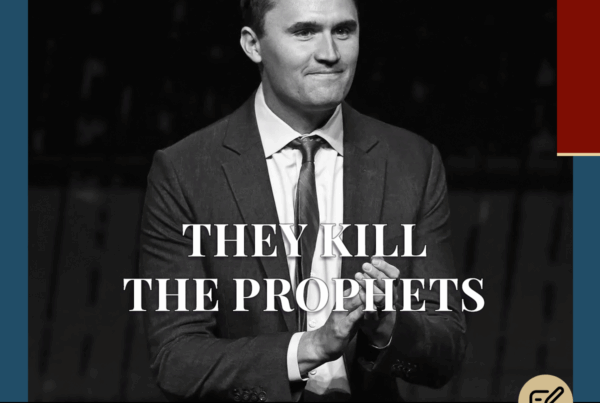
The recent tragedies in the news including the assassination of Charlie Kirk and other senseless acts of violence, have left our hearts heavy with grief and our spirits searching for direction. In these moments of profound loss, where do we turn and what do we do?
We turn to the life and teachings of Jesus Christ, who navigated His own sorrow after the beheading of John the Baptist. By reflecting on this pivotal moment in Scripture, we can find hope, purpose, and the strength to carry on.
But first, we must ask the question,
Why Is There So Much Violence?
The question of why violence pervades our world—evident in tragedies like the assassination of Charlie Kirk and other senseless acts—strikes at the heart of human experience and demands a thoughtful response. All religions will offer a framework to understand this reality, yet they are not all aligned.
The Biblical Christian rooted in the biblical narrative of creation, fall, and redemption. Violence is not God’s design but a consequence of human sin, the influence of spiritual evil, and a world awaiting restoration. Yet, through Christ, we find hope, purpose, and a call to combat violence with love and truth. In the next blog I will share more on violence and redemption from a Christian perspective and in comparison to four other world religions.
But for today, hearts are still reeling and I would like to share today on rising in faith after the sting of tragedy looking back to the tragic beheading of John the Baptist and Jesus’s response. Can the biblical story help us today? Yes, yes it can and it does.
John the Baptist lived fearlessly as a prophet, boldly confronting Herod Antipas for his unlawful marriage to Herodias, his brother’s wife. His courage led to his imprisonment and, ultimately, his brutal execution. As recorded in Matthew 14:3-12 (NIV):
“Now Herod had arrested John and bound him and put him in prison because of Herodias, his brother Philip’s wife, for John had been saying to him: ‘It is not lawful for you to have her.’ … On Herod’s birthday, the daughter of Herodias danced for the guests and pleased Herod so much that he promised with an oath to give her whatever she asked. Prompted by her mother, she said, ‘Give me here on a platter the head of John the Baptist.’ … He ordered that her request be granted and had John beheaded in the prison.”
This horrific act, driven by Herodias’s vengeance and Herod’s pride, silenced a man who lived to proclaim, “Repent, for the kingdom of heaven has come near” (Matthew 3:2). The Jewish historian Josephus noted that Herod feared John’s influence over the people, which could spark rebellion, and many believed Herod’s later misfortunes were divine judgment for this act. John’s death was not just a personal loss but a public tragedy, shaking those who looked to him as a voice of truth.
Jesus’ Response: A Blueprint for Grief and Resilience
When the devastating news of John the Baptist’s death reached Jesus, as recorded in Matthew 14:12-13, He withdrew to a solitary place by boat, seeking solitude to mourn His cousin and forerunner. This intentional retreat reveals a profound truth: grief is a sacred space. Jesus did not suppress His sorrow or urge His disciples to “move on” quickly. Instead, He modeled the importance of pausing to process pain, teaching us that acknowledging our emotions is not a sign of weak faith but a testament to the depth of our love. As Christians mourning Charlie Kirk’s death, we are invited to follow Jesus’ example—taking time to lament, pray, and lay our burdens before God, trusting that He is near to the brokenhearted (Psalm 34:18).
Yet, Jesus’ solitude was not permanent. Matthew 14:13-21 recounts how, when crowds followed Him seeking hope, He responded with compassion, teaching them and performing the miracle of feeding the five thousand. This act of selflessness in the midst of grief shows us that our personal pain does not exempt us from our calling to serve others. Charlie’s death may leave us feeling unmoored, but Jesus’ example calls us to lean into our faith community, to share God’s love, and to serve despite our sorrow. By reaching out to others, we honor Charlie’s legacy and reflect the heart of Christ, who ministered through His own pain.
Moreover, Jesus used this season of loss to strengthen His disciples’ faith and unity. In Matthew 14:22-33, after John’s death, He walked on water, calling Peter to step out in faith amidst the storm. When Peter faltered, Jesus caught him, teaching that trust in Him can sustain us through even the fiercest trials. This moment illustrates how adversity can deepen our reliance on Christ and our connection to one another. Charlie’s absence is a wound, but it’s also an opportunity to grow in faith. Like Peter, we are called to step out boldly, trusting that Jesus will uphold us. By gathering with our brothers and sisters in Christ—through prayer, fellowship, and shared purpose—we can support one another and continue Charlie’s mission of proclaiming truth.
Jesus also directed His disciples to focus on the eternal. John’s death was a stark reminder of the cost of following God’s call, yet Jesus consistently pointed to the Kingdom of Heaven as the ultimate hope (Matthew 14:28-31). Charlie’s life, like John’s, was a powerful testimony to God’s truth, and his death does not diminish his impact but amplifies the urgency of our mission. We are called to live for Christ with unwavering commitment, knowing that our present sufferings are temporary in light of eternity (Romans 8:18). By keeping our eyes fixed on God’s promises, we find the courage to move forward, carrying Charlie’s legacy of faith into the future.
This shows us that grief, while personal, doesn’t exempt us from our calling. Charlie’s death may leave us feeling directionless, but Jesus’ example reminds us to lean into our faith community, to serve, and to share God’s love, even in pain.
Jesus also gathered His disciples close during this time, strengthening their bond and preparing them for the trials ahead. In Matthew 14:22-33, after John’s death, Jesus walks on water, calling Peter to step out in faith. This moment illustrates how Jesus used adversity to deepen His disciples’ trust in Him. Likewise, we can come together as a community, supporting one another through prayer, fellowship, and shared purpose. Charlie’s absence is a wound, but it’s also an opportunity to grow in faith, to step out boldly as Peter did, trusting that Christ will sustain us.
Furthermore, Jesus taught His disciples to focus on the eternal. John’s death was a stark reminder of the cost of following God’s call, yet Jesus continually pointed to the Kingdom of Heaven as the ultimate hope (Matthew 14:28-31). We can move forward by remembering that Charlie’s life, like John’s, was a testimony to God’s truth. Their deaths do not diminish their impact but magnify the urgency of our mission to live for Christ.
Let us move forward by grieving honestly, serving compassionately, and trusting boldly. Gather with your brothers and sisters in Christ, pray for strength, and continue Charlie’s legacy of faith. As Jesus led His disciples through loss, He leads us now, promising in John 16:33 that He has overcome the world. With His guidance, we can find peace and purpose, knowing Charlie’s life—and ours—rests in the hands of our Savior.
Moving Forward:
To honor Charlie’s legacy and navigate this season of grief, let us commit to the following actions, rooted in Scripture:
- Grieve Honestly: Take time to mourn and bring your pain to God, trusting His comfort (Psalm 34:18: “The Lord is close to the brokenhearted and saves those who are crushed in spirit”).
- Serve Compassionately: Follow Jesus’ example by serving others with love, even in sorrow, fulfilling the law of Christ (Galatians 6:2: “Carry each other’s burdens, and in this way you will fulfill the law of Christ”).
- Trust Boldly: Step out in faith, relying on Jesus to sustain you through trials (John 16:33: “In this world you will have trouble. But take heart! I have overcome the world”).
- Unite in Community: Gather with fellow believers to pray, encourage one another, and advance God’s kingdom (Hebrews 10:24-25: “Let us consider how we may spur one another on toward love and good deeds, not giving up meeting together”).
- Focus on Eternity: Live with the assurance that our hope lies in Christ’s victory, and our lives are part of God’s eternal plan (Romans 8:18: “Our present sufferings are not worth comparing with the glory that will be revealed in us”).
A Call to Persevere
The assassination of Charlie Kirk, like John the Baptist’s death, underscores the cost of standing for truth in a fallen world. These acts of violence shock us, but they also point to the urgency of God’s redemptive mission, calling Christians to be agents of peace and reconciliation.
Apologists like William Lane Craig argue that God’s redemptive plan gives meaning to suffering. While violence is real, it’s not the final word. Revelation 21:4 promises a future where God “will wipe every tear from their eyes,” and death and pain will cease. Until then, Christians are called to embody Christ’s love, countering violence with compassion, justice, and the gospel’s transformative power.
Yet, Jesus’ response to John’s death shows us that grief is not the end of our story. By grieving honestly, serving compassionately, trusting boldly, uniting in community, and focusing on eternity, we can move forward with purpose and hope. Let us honor Charlie’s legacy by living out our faith with courage, knowing that Christ, who has overcome the world, holds us—and Charlie—in His hands. As Isaiah 40:31 declares, “Those who hope in the Lord will renew their strength. They will soar on wings like eagles.”
Will you join your brothers and sisters in Christ to pray, serve, and carry on in faith? Let us step forward together, trusting in God’s unshakable promise of hope and redemption, and continue the work Charlie began, proclaiming God’s truth with boldness and love.